
A Learning Agenda to Address Immunization Equity and Access for Nigeria to End Zero-Dose Children by 2030: Report from a National Stakeholder Consensus Workshop
Main Article Content
Keywords
Immunization Programs, Delphi Technique, Health Priorities, Vaccination Coverage, Nigeria
Abstract
Background: Nigeria has one of the highest burdens of zero-dose (ZD) children, those who have not received the first dose of pentavalent vaccine, despite multiple national and partner initiatives to strengthen routine immunization. A coordinated national learning agenda is required to guide evidence generation and use for reducing ZD children. The study objective is to describe the process and outcomes of a national stakeholder workshop that used a modified Delphi approach to prioritise learning questions on ZD children in Nigeria.
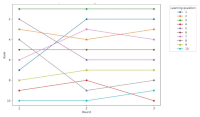
Methodology: The Zero-Dose Learning Hub (ZDLH) convened a national workshop of immunization stakeholders from government, development partners, and civil society. A three-round modified Delphi process was used. In Round 1 (pre-workshop), participants independently scored learning questions derived from global Gavi learning priorities and Nigerian political-economy analyses. In Round 2 (during the workshop), participants discussed and re-scored questions in plenary and small groups. In Round 3 (post-workshop), participants completed a final independent ranking.
Results: Ten learning questions were prioritised under three themes: equity, health systems, and innovation. The highest-ranked questions consistently focused on identifying and monitoring zero-dose & under-immunised children; understanding who and where they are and why they are missed; and health-system factors influencing their identification and measurement. Community engagement, data harmonisation, and capacity-building emerged as secondary but important areas.
Conclusion: The workshop generated a nationally owned learning agenda that highlights Nigeria’s most urgent evidence needs for reaching ZD children. The prioritised questions provide a practical roadmap for NPHCDA and partners to strengthen immunization equity, guide operational research, and support targeted programme implementation.
References
2. AFENET/AHBN (ZDLH). 2024. Closing The Immunization Gap: Enhancing Routine Immunization in Nigeria by Reaching Zero-Dose and Under Immunized Children in Marginalized Communities: Report of a Rapid Assessment. 2024. Accessed December 9, 2024. https://zdlh.gavi.org/sites/default/files/2024-07/Rapid_Assessment_of_Immunization_Landscape_in_Nigeria_ZDLH_Nigeria.pdf
3. Mahachi K, Kessels J, Boateng K, Jean Baptiste AE, Mitula P, Ekeman E, et al. Zero- or missed-dose children in Nigeria: Contributing factors and interventions to overcome immunization service delivery challenges. Vaccine. 2022;40(37):5433-5444. https://doi:10.1016/J.Vaccine.2022.07.058
4. NPC. Nigeria; 2018 Demographic and Health Survey. Accessed September 19, 2024. https://dhsprogram.com/pubs/pdf/SR264/SR264.pdf
5. Gavi Zero-Dose Learning Hub. Nigeria Zero-Dose Situation Analysis.; 2023. Accessed September 19, 2022. https://zdlh.gavi.org/sites/default/files/2023-12/ZDLH_Nigeria_Situation_Analysis_2023.pdf
6. MOMENTUM Routine Immunization Transformation and Equity Turning Data and Data Systems into Action: Reaching and Monitoring Zero-Dose Children in Nigeria. Published online 2024. Accessed November 21, 2024 https://publications.jsi.com/JSIInternet/Inc/Common/_download_pub.cfm?id=24359&lid=3
7. Lindstrand A, Mast E, Churchill S, Rahimi N, Grevendork J, Brooks A, et al. Implementing the immunization agenda 2030: A framework for action through coordinated planning, monitoring & evaluation, ownership & accountability, and communications & advocacy. Vaccine. 2024;42:S15-S27. https://doi:10.1016/J.vaccine.2021.09.045
8. WHO. Immunization Agenda 2030. 2020. Accessed November 25, 2024. https://www.who.int/teams/immunization-vaccines-and-biologicals/strategies/ia2030
9. Exploring Gavi 5.0/5.1 Learning Priorities: shaping immunisation strategies. Accessed January 28, 2025. https://www.gavi.org/our-alliance/strategy/learning-system-strategy/exploring-gavi-50-51-learning-priorities-shaping-immunisation-strategies
10. Homepage | Zero-Dose Learning Hub. Accessed January 28, 2025. https://zdlh.gavi.org/
11. Brauer P, Desroches S, Dhaliwal R, Li A, Wang Y, Conklin AI, et al. Modified Delphi Process to Identify Research Priorities and Measures for Adult Lifestyle Programs to Address Type 2 Diabetes and Other Cardiometabolic Risk Conditions. Can J Diabetes. 2022;46(4):411-418. https://doi:10.1016/J.JCJD.2022.01.003
12. Zero-Dose Learning Hub (ZDLH) Learning Agenda Workshop. Accessed January 30, 2025 https://zdlh.gavi.org/sites/default/files/2024-09/ZDLH%20Nigeria%20Learning%20Agenda%20Workshop%20Report.pdf
13. Assessment of the Political Economy Context Surrounding Evidence Use for Zero-Dose Programming and Policies in Nigeria. Published online 2024. Accessed January 28, 2025. https://zdlh.gavi.org/.
14. Carter A, Msemburi W, Sim SY, Gaythorpe KAM, Lambach P, Lindstrand A, et al. Modeling the Impact of Vaccination for the Immunization Agenda 2030: Deaths Averted Due to Vaccination Against 14 Pathogens in 194 Countries from 2021-2030. SSRN Electronic Journal. Published online April 27, 2021. https://doi:10.2139/SSRN.3830781
15. Ali HA, Hartner AM, Echeverria-Londono S, Roth J, Li X, Abbas K, et al. Vaccine equity in low and middle income countries: a systematic review and meta-analysis. International Journal for Equity in Health 2022 21:1. 2022;21(1):1-30. https://doi:10.1186/S12939-022-01678-5
16. Wigley A, Lorin J, Hogan D, Utazi CE, Hagedorn B, Dansereau E, et al. Estimates of the number and distribution of zero-dose and under-immunised children across remote-rural, urban, and conflict-affected settings in low and middle-income countries. PLOS Global Public Health. 2022;2(10): e0001126. Accessed March 28, 2025 https://doi:10.1371/Journal.Pgph.0001126
17. Jain M, Shisler S, Lane C, Bagai A, Brown E, Engelbert M. Use of community engagement interventions to improve child immunisation in low- and middle-income countries: A systematic review and meta-analysis. Campbell Systematic Reviews. 2022;18(3):e1253. Accessed May 8, 2025 https://doi:10.1002/CL2.1253
18. Bell J, Lartey B, Spickernell G, Darrell N, Salt F, Gardner C, et al. Applying a social-ecological model to understand factors impacting demand for childhood vaccinations in Nigeria, Uganda, and Guinea. SSM - Qualitative Research in Health. 2022;2:100180. Accessed April 9, 2025 https://doi:10.1016/J.SSMQR.2022.100180
19. Wang SA, Hyde TB, Mounier-Jack S, Brenzel L, Favin M, Gordon WS, et al. New vaccine introductions: Assessing the impact and the opportunities for immunization and health systems strengthening. Vaccine. 2013;31(0 2):B122. Accessed April 14, 2025 https://doi:10.1016/J.Vaccine.2012.10.116
20. Fousseni S, Ngangue P, Barro A, Ramde SW, Bihina LT, Ngoufack MN, et al. Navigating the Road to Immunization Equity: Systematic Review of Challenges in Introducing New Vaccines into Sub-Saharan Africa’s Health Systems. Vaccines 2025, Vol 13. 2025;13(3). Accessed June 10, 2025https://doi:10.3390/vaccines13030269
Article Sidebar
Article Details

This work is licensed under a Creative Commons Attribution-NonCommercial-ShareAlike 4.0 International License.
This is an open-access journal and articles are distributed under the terms of the Creative Commons Attribution Non-Commercial Share-Alike License 4.0. This licence allows users to download and share, remix, tweak and build upon the article for non-commercial purposes, so long as the original authorship is acknowledged and the new creations are licensed under identical terms.