
Evaluation and Impact of Pharmaceutical Residues from Hospital Waste in Lagos State on Dissolved Oxygen in Water
Main Article Content
Keywords
Pharmaceutical residues, Impact, Hospital waste, Dissolved oxygen, Water
Abstract
Background: This study assessed the influence of pharmaceutical residues from hospital waste on dissolved oxygen (DO) levels in water sources near four hospitals in Lagos State, Nigeria.
Methodology: A total of 35 water samples were collected from boreholes, wells, and taps adjacent to hospital waste sites and analyzed for ciprofloxacin, paracetamol, and bromazepam residues using high-performance liquid chromatography (HPLC), alongside DO measurements with a calibrated digital meter.
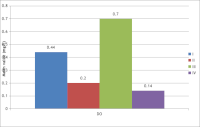
Results: Residue concentrations varied across sites, with paracetamol levels exceeding WHO guidelines in several samples, potentially contributing to the observed low DO (<2 mg/L) across all locations—well below thresholds for aquatic life (5–6 mg/L) and drinking water (>6.5 mg/L). Hospital location D exhibited the highest residue levels, followed by location B, while locations A, C, and the control (E) showed lower concentrations. Statistical analyses (t-tests) indicated no significant differences for ciprofloxacin and bromazepam relative to permissible limits (p > 0.05), but paracetamol was significantly elevated (p < 0.05).
Conclusion: These findings highlight an association between pharmaceutical residues and DO depletion, underscoring risks to aquatic ecosystems and human health. Recommendations include enhanced hospital waste segregation, advanced water treatment protocols, and policy reforms to enforce pharmaceutical disposal standards, aligning with SDGs 3, 6, and 11 for sustainable health and water management.
References
2. Alexy R, Kümmerer K. Assessment of degradation of 18 antibiotics in the Closed Bottle Test. Chemosphere. 2004;57(6):505-12.
3. Anwar M, Iqbal Q, Saleem F. Improper disposal of unused antibiotics: an often-overlooked driver of antimicrobial resistance. Expert Rev Anti Infect Ther. 2020;18(7):697-9.
4. Azuma T, et al. Detection of pharmaceuticals and phytochemicals together with their metabolites in hospital effluents in Japan, and their contribution to sewage treatment plant influents. Sci Total Environ. 2016;548-549:189-97. Available from: https://doi.org/10.1016/j.scitotenv.2015.12.157
5. BIO Intelligence Service. Study on the environmental risks of medicinal products. Paris: Executive Agency for Health and Consumers; 2013. Available from: https://ec.europa.eu/health/sites/health/files/files/environment/study_environment.pdf
6. Boxall AB, Rudd T, Blackwell P, Kyriakides S, Cooper D, Thomas M, et al. The fate of veterinary medicines in the wider environment: Implications for human and animal health. J Antimicrob Chemother. 2004;54(1):7-17.
7. Burns E, et al. Application of prioritization approaches to optimize environmental monitoring and testing of pharmaceuticals. Taylor & Francis Inc.; 2018. Available from: https://doi.org/10.1080/10937404.2018.1465873
8. Cunningham VL, Buzby ME, Hutchinson TH, Mastrocco F, Parke NJ, Roden N. Effects of pharmaceuticals on aquatic organisms. Regul Toxicol Pharmacol. 2009;53(1):20-8.
9. Daughton C, Ruhoy I. Environmental footprint of pharmaceuticals: The significance of factors beyond direct excretion to sewers. Environ Toxicol Chem. 2009;28(12):2495-521. Available from: https://doi.org/10.1897/08-382.1
10. Ezeudu OB, Ezeudu TS, Ugochukwu UC, Tenebe IT, Ajogu AP, Nwadi UV, et al. Healthcare waste management in Nigeria: A review. Recycling. 2022;7(6):87. Available from: https://doi.org/10.3390/recycling7060087
11. Hargreaves JA. Design and management of pond aquaculture. In: Diana JS, Macintosh DJ, editors. Conservation and Management of Fish and Fisheries. Blackwell Publishing; 2013. p. 147-64.
12. Hazarika J. A study on medical laboratory waste management in a psychiatric hospital of North East India. Int J Adv Res. 2015;3(7):1563-6.
13. Hernando MD, Mezcua M, Fernandez-Alba AR, Barcelo D. Environmental risk assessment of pharmaceutical residues in wastewater effluents, surface waters and sediments. Talanta. 2006;69(2):334-42.
14. Hou J, Wang C, Mao D, Luo Y. The occurrence and fate of tetracyclines in two pharmaceutical wastewater treatment plants of Northern China. Environ Sci Pollut Res. 2016;23(2):1722-31.
15. Hughes SR, Kay P, Brown LE. Global synthesis and critical evaluation of pharmaceutical data sets collected from river systems. Environmental science & technology. 2013 Jan 15;47(2):661-77.
16. Jaiyeola O. Water from boreholes, wells in Lagos unfit for human consumption. Punch Healthwise. 2022 June 24 [updated 2023 Apr 13]. Available from: https://healthwise.punchng.com
17. Janik-Karpinska E, Brancaleoni R, Niemcewicz M, Wojtas W, Foco M, Podogrocki M, et al. Healthcare waste—a serious problem for global health. Healthcare (Basel). 2023;11(2):242. Available from: https://doi.org/10.3390/healthcare11020242
18. Kümmerer K. From a problem to a business opportunity—design of pharmaceuticals for environmental biodegradability. Sustain Chem Pharm. 2019;12:100136. Available from: https://doi.org/10.1016/j.scp.2019.100136
19. Lacorte S, et al. Pharmaceuticals released from senior residences: occurrence and risk evaluation. Environ Sci Pollut Res. 2018;25(7):6095-106.
20. Leal Filho W, Azul AM, Brandli L, Özuyar PG, Wall T, editors. Self-Efficacy. In: Responsible Consumption and Production. Encyclopedia of the UN Sustainable Development Goals. Cham: Springer; 2020. Available from: https://doi.org/10.1007/978-3-319-95726-5_3001306
21. Liao J, Li X, Chen G. Solid-phase extraction for the determination of pharmaceuticals and personal care products in environmental water samples: A review. J Chromatogr A. 2012;1250:2-23.
22. Manole F, Marian P, Mekeres GM, Csep AN. A review of the effects of pharmaceutical waste on the environment and human health. Pharmacophore. 2023;14(2):106-10.
23. McClain CJ, Price S, Barve S, Devalarja R, Shedlofsky S. Acetaminophen hepatotoxicity: an update. Current gastroenterology reports. 1999 Feb;1(1):42-9.
24. Obubu M, Chuku N, Ananaba A, Sadiq FU, Sambo E, Kolade O, Oyekanmi T, Olaosebikan K, Serrano O. Lagos State Hospital Waste Management Practices: A Descriptive Overview with Stakeholders’ Role and Key Recommendations. Journal of Environmental Protection. 2023 Feb 13;14(2):108-25.
25. Ogundele OM, Rapheal OM, Abiodun AM. Effects of municipal waste disposal methods on community health in Ibadan, Nigeria. Polytechnica. 2018;1:61–72. Available from: https://doi.org/10.1007/s41050-018-0008-y
26. Patneedi H, Prasadu B. Impact of pharmaceutical wastes on human life and environment. ResearchGate. 2015.
27. Pereira MA, Camanho AS, Marques RC, Figueira JR. The convergence of WHO member states regarding the UN’s SDG ‘good health and well-being.’ Omega. 2021;104:102495.
28. Pruden A, Morawski A, LeChevallier RW. Assessing the risk of antibiotic resistance gene transmission from hospital and community wastewater to the environment. Water Res. 2006;40(1):329-36.
29. Prudencio A, Oladele O, Osibanjo O. Healthcare Waste Management in Nigeria: A Review. Waste Manag Res. 2020;7(6):87-98.
30. Sarmah AK, Meyer MT, Boxall AB. Pharmaceuticals and personal care products in the environment: Sources, fate, effects, and risks. Chem Rev. 2006;106(8):3355-89.
31. UN Habitat. Tracking progress towards inclusive, safe, resilient and sustainable cities and human settlements. SDG 11 Synthesis Report. 2018.
32. UNESCO (United Nations Educational, Scientific and Cultural Organization). Emerging pollutants in water and wastewater [Internet]. 2020. Available from: https://en.unesco.org/emergingpollutantsinwaterandwastewater
33. US EPA. Medical waste. 2023. Available from: https://www.epa.gov/rcra/medical-waste
34. Wang J, Mao D, Mu Q, Luo Y. Fate and proliferation of typical antibiotic resistance genes in five full-scale pharmaceutical wastewater treatment plants. Sci Total Environ. 2015;526:366-73.
35. Weber F, et al. Pharmaceuticals in the environment—The global perspective: Occurrence, effects, and potential cooperative action under SAICM. German Federal Environmental Agency; 2014.
36. Wetzel RG. Limnology: Lake and River Ecosystems. 3rd ed. San Diego: Academic Press; 2001.
37. World Health Organization (WHO). Health-care waste [Internet]. 2018. Available from: https://www.who.int/news-room/fact-sheets/detail/health-care-waste
38. World Health Organization, United Nations Children’s Fund. Progress on household drinking water, sanitation and hygiene 2000-2020: five years into the SDGs. Geneva: WHO; 2021.
39. Zhou Y, Wu S, Zhou H, Huang H, Yaocheng D, Wang H, et al. Chiral Pharmaceuticals: Environmental sources, potential human health impacts, remediation technologies and future perspectives. Environ Int. 2018;121:523-37.
40. Zuccato E, Castiglioni S, Bagnati R, Fanelli C, Provvisiero E. Simultaneous determination of 12 pharmaceuticals in water by liquid chromatography-tandem mass spectrometry. J Chromatogr A. 2006;1118(1-2):180-9.
Article Sidebar
Article Details

This work is licensed under a Creative Commons Attribution-NonCommercial-ShareAlike 4.0 International License.
This is an open-access journal and articles are distributed under the terms of the Creative Commons Attribution Non-Commercial Share-Alike License 4.0. This licence allows users to download and share, remix, tweak and build upon the article for non-commercial purposes, so long as the original authorship is acknowledged and the new creations are licensed under identical terms.